FASPE (Fellowships at Auschwitz for the Study of Professional Ethics) is a non-profit organization whose mission is to promote ethical leadership among professionals. Our commitment to this mission is based on two tenets: professionals possess enormous influence on all aspects of contemporary society; and that influence comes with ethical responsibility.
FASPE’s distinctive pedagogy examines the roles and behavior of individual professionals who acted in support of the policies of Nazi Germany as an initial framework for approaching ethical responsibility in the professions today. By studying the behavior and motivations of those professionals who, by choice and action, designed, enabled, and executed Nazi policies, we create a lens for understanding the importance of ethical leadership today. We emphasize self-awareness, professionalism, and ethical behavior, not mere legal compliance or self-governing rules of the trade.
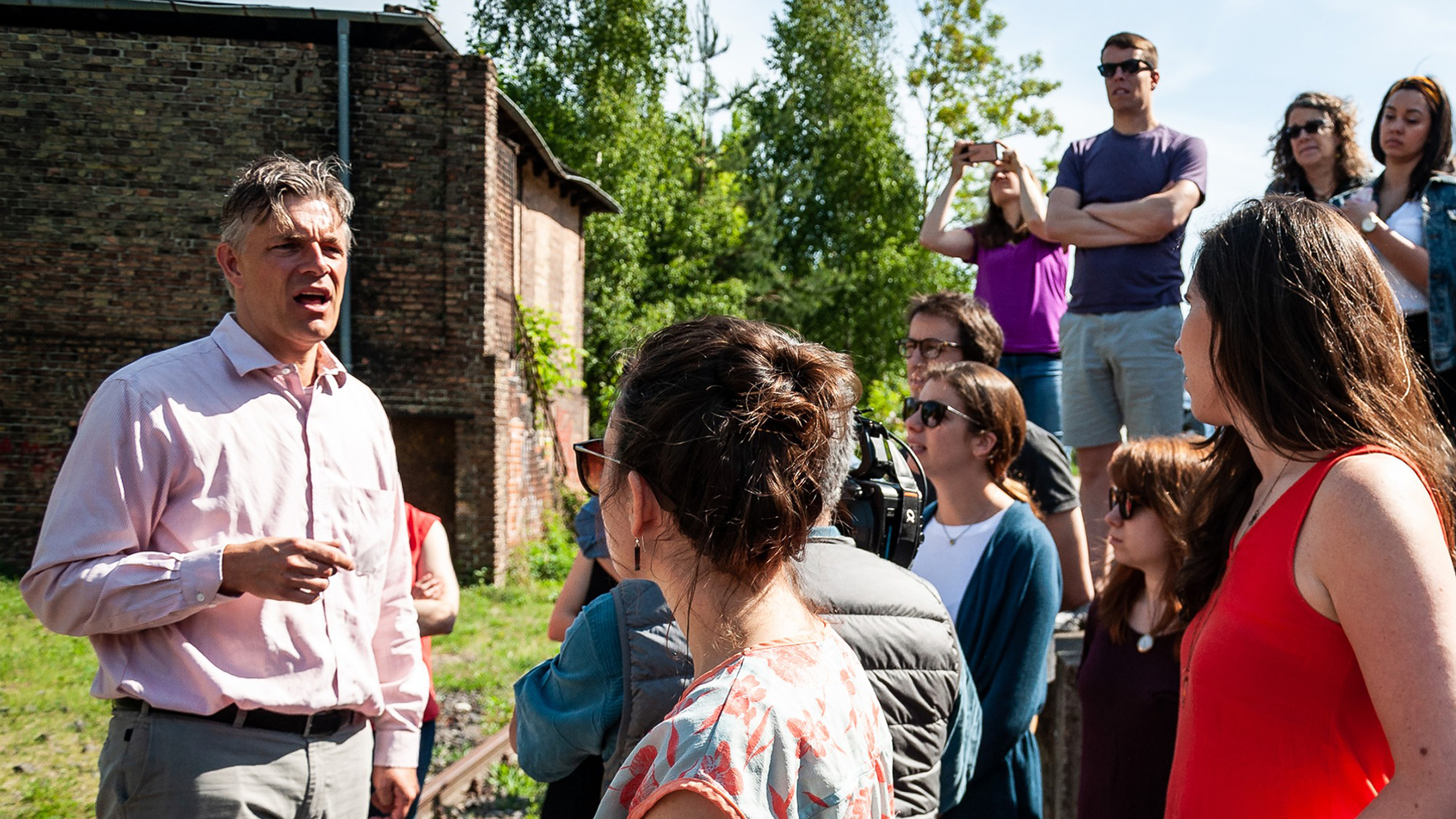
Founded in 2010, FASPE awards 85 Fellowships each year to graduate students and early-career professionals from six professions: Business, the Clergy, Design & Technology, Journalism, Law, and Medicine. The Fellowships begin with two weeks of intensive study in Germany and Poland at sites of historic complicity. Leveraging the power of place, Fellows participate in seminars and interdisciplinary discussions about professional behavior today.
The FASPE Fellowship extends well beyond the two weeks in Europe. Fellows join a lifetime network of nearly 1,100 alumni who continue to engage through workshops, virtual programming, writing, lecturing, symposia, and social and professional networking. FASPE alumni bring their commitment to ethical leadership to practice in places of worship and chaplaincies, law firms and public defender offices, hospitals and rural clinics, global corporations and technology start-ups, newsrooms and digital media, academia, and government and policy institutions.
Beyond its signature Fellowship program, FASPE offers Ethical Leadership Training workshops for practicing professionals in organizations across industries and sectors, and participates in civic discourse through published writings, lectures, and participation in practical symposia and academic conferences.